


The Power of the Underdog
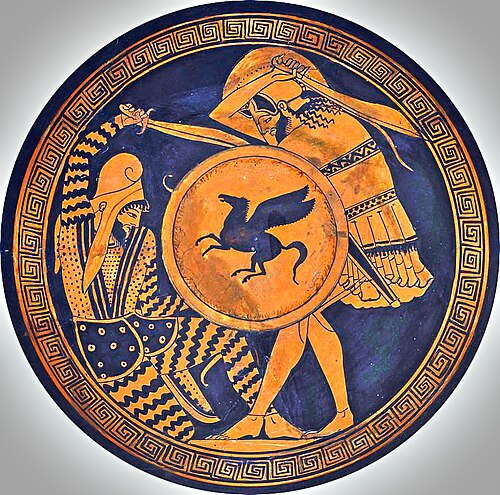
It’s been our Classics Enrichment Week, and in Monday’s assembly, we looked back over 2,400 years to one of the greatest underdog stories in human history, when the cities of ancient Greece overcame the odds to defeat the might of the Persian Empire, not once but twice, ten years apart.
In the early 5th century BC, the Persian Empire was a colossal superpower, stretching across continents and possessing seemingly endless wealth and military resources. In contrast, Greece was not a unified country, but a scattered collection of small, fiercely independent city-states that often fought amongst themselves. When the Persian Kings, Darius and later his son Xerxes, set their sights on conquering Greece, the outcome seemed inevitable.
Yet, the Greeks famously defied the odds, repelling not one but two Persian invasions. The first was in 490 BC when an outnumbered Athenian army faced a much larger Persian force. Through a combination of immense courage and the superior tactics of their hoplite soldiers, the Athenians won a crushing and unexpected victory. Perhaps the most famous feature of this battle was the heroic effort of an Athenian named Pheidippides, who ran roughly 26 miles from the battlefield back to Athens to announce their victory before dying from exhaustion. The battle was, of course, at a place called Marathon.
A decade later, in 480 BC, the Persians returned with an even more overwhelming army under the leadership of King Xerxes I. The Greeks took their first stand at Thermopylae, a narrow mountain pass where – most famously – King Leonidas of Sparta and his personal bodyguard of just 300 men, along with a few hundred brave allies, fought to the death to hold back the Persian tide. Ultimately betrayed, surrounded, and wiped out, their heroic sacrifice had bought precious time for the rest of Greece and stands as a symbol of courage against impossible odds.
The Persian army then marched towards Athens. In an act of courage and strategic brilliance, the Athenian people made the agonising decision to abandon the city, allowing the Persians to capture and burn it to the ground. Instead, the Athenians put their trust in their navy, and the gamble paid off at the Battle of Salamis, where the Athenian commander Themistocles lured the huge but cumbersome Persian fleet into the narrow straits, where the Greek ships decisively outmanoeuvred and destroyed them.
The Persian Wars were much more than just a series of military victories. The fact that these small city-states stood firm against a huge empire proved to many that free people could resist subjugation despite the odds, preserving and promoting the concept of democracy in the case of the Athenians, and laying the cultural foundations for the Western civilisation as we know it today.
Have a great weekend
Best wishes
Michael Bond