

It Could be Ye: England’s first National Lottery
Dear all
Yesterday was the 32nd anniversary of the first UK National Lottery draw. Launched on 19th November 1994, it was watched by nearly 22 million people on television. To put that into context, around 20 million people have watched the Euro and World Cup finals when England have featured in recent years, and a similar number watched the coronation of King Charles III. Many of those who watched that first draw – myself included – no doubt did so in the hope they would win the big prize, even though the odds of doing so were just short of 14 million to one. Nonetheless, seven lucky people shared the jackpot that night, winning over £800,000 each.
Since then, millions of people have bought tickets, and the lottery raises around £32 million every week for good causes, funding everything from local community projects to Team GB’s Olympic and Paralympic athletes.
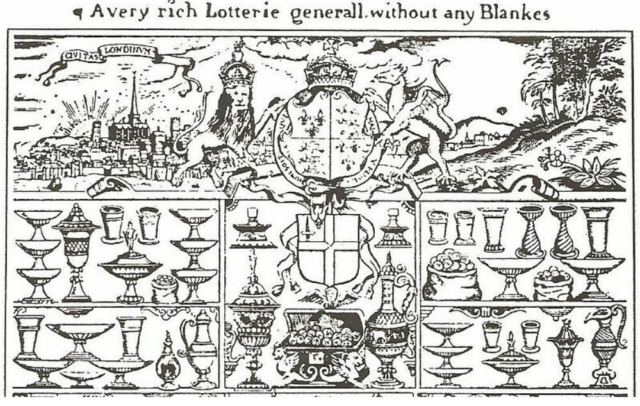
But to find the true origins of the national lottery, we must travel back over 400 years to the reign of Queen Elizabeth I. Facing a financial shortfall in the late 1560s, the monarch faced a choice between raising taxes or trying something new to refill the government’s coffers. She chose the latter and established the very first English national lottery, which was drawn on 11th January 1569, at St Paul’s Cathedral in London.
Unlike today, the Elizabethan lottery was highly exclusive. Tickets cost ten shillings each, a price that was far beyond the means of an ordinary person. It was intentionally targeted at the upper class, and purchasing a ticket quickly became a prominent status symbol in Tudor society. The first prize was an enormous £5,000, to be paid partly in cash and partly in valuable luxury goods, but perhaps the biggest difference with the Elizabethan lottery was the fact that anyone who bought a ticket was given a literal ‘get-out-of-jail-free’ card. Ticket holders were granted freedom from arrest for all crimes, with the only exceptions being murder, piracy, and treason. The draw was limited to 400,000 entries, and was widely regarded as having achieved its goal of raising funds without forcing a mandatory tax on the public.
Unfortunately, the identity of the very first grand prize winner has been lost to history, and neither do we know who escaped justice by buying a ticket, but Queen Elizabeth I’s inventive fundraising idea arguably laid the foundation for the lotteries played around the world to this day.
Have a great weekend
Best wishes
Michael Bond