
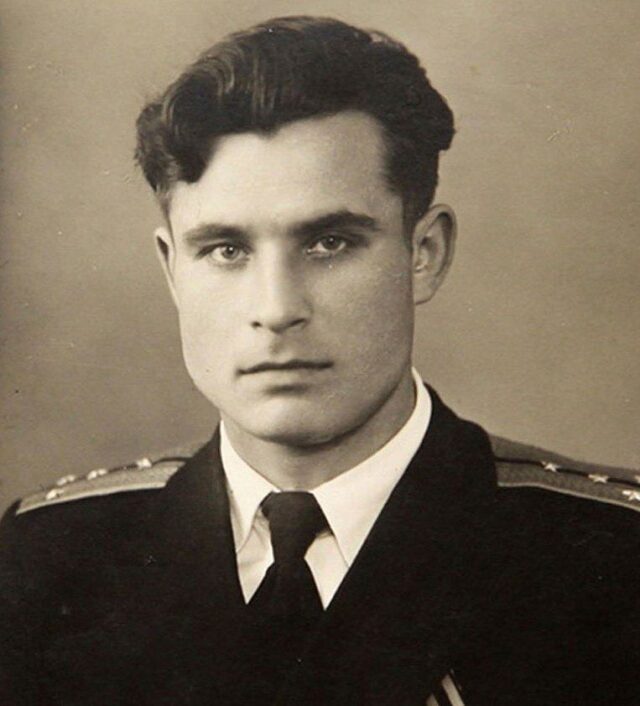


Calmness Under Pressure that Saved the World
Dear all,
In Monday’s assembly, we marked the 63rd anniversary of the moment when the world perhaps came closest to a nuclear war than perhaps has ever been the case before or since. I doubt if many readers know the name of Vasili Alexandrovich Arkhipov, and yet his actions, taken in a cramped submarine deep below the ocean’s surface, not far from the island of Cuba, arguably saved the lives of millions.
In 1962, the world was gripped by the Cold War and was teetering on the brink of conflict during the Cuban Missile Crisis. On 14th October, US spy planes had detected the construction of Russian missile launch sites on the island of Cuba, which would have put the USA directly in reach of their nuclear weapons. This led to one of the most intense stand-offs in human history, as President Kennedy announced a blockade of Cuba, with Russian ships steaming towards the island equipped with the weapons that would complete the launch sites. The world held its breath as one mistake or wrong decision would have led to nuclear war.
At the height of the crisis on 27 October, Vasili Arkhipov was serving aboard a B-59 Soviet submarine near Cuba. Trapped in the sweltering submarine, the air-conditioning having already failed, the crew was cut off from communication and unaware of the latest news in the situation that was unfolding above them. US planes had begun dropping non-lethal depth charges in an attempt to signal that the submarine should come to the surface. However, the crew of B-59 believed this was the beginning of a Third World War.
Meanwhile, what the US planes above the surface didn’t know was that the B-59 carried a ten-kilotonne nuclear torpedo, which its officers had permission to launch without waiting for approval from Moscow. Two of the senior officers on board, including the captain, Valentin Savitsky, were determined to fire the missile. Savitsky reportedly exclaimed, ‘We’re gonna blast them now! We will die, but we will sink them all – we will not become the shame of the fleet.’
Fortunately, all three senior officers had to agree before they could deploy the weapon. In that moment of intense fear and pressure, Arkhipov refused to sanction the launch, instead managing to calm the captain down and ultimately preventing the torpedo from being fired and nuclear war from ensuing.
For this act of bravery and composure, Vasili Arkhipov was awarded the ‘Future of Life award,’ a prize given for heroic acts that greatly benefit humankind despite personal risk, but not until well after his death in 1998, which was in part caused by exposure to radiation in 1961, when he had fixed an overheating reactor. His story reminds us that sometimes the biggest heroes are those the furthest from the limelight, and we must all be grateful for the calmness under pressure shown by Vasiliy Arkhipov in circumstances that must have been unimaginably difficult.
The Future of Life Institute, which issues the award to which it gives its name, is an organisation that attempts to preempt and tackle threats to humanity. When she was presented with the award, Arkhipov’s daughter said that her father always said that he just did what he had to do, and didn’t consider himself a hero.
It’s quite remarkable to know that millions of deaths were averted because of the actions of one submarine officer. Other near misses – the ones of which we’re aware – include President Jimmy Carter once leaving nuclear launch codes in his suit when it was sent to the dry cleaners, and during the 1960s the locks fitted to long-range missiles to prevent accidental or mistaken use had their codes deliberately left at 000000 so as not to impede a quick launch in a crisis. Whether you think nuclear weapons have kept the world safer or made it a much more dangerous place since they were created, perhaps the overarching message from this week’s assembly reading is that human beings have both the capacity to destroy but also to save. In 1962, the decision not to start World War Three was, at least in part, taken in the sweltering heat of a submarine’s control room by a cool-headed officer named Vasily, without whom none of us would likely be here today.
Have a great weekend
Best wishes
Michael Bond


