
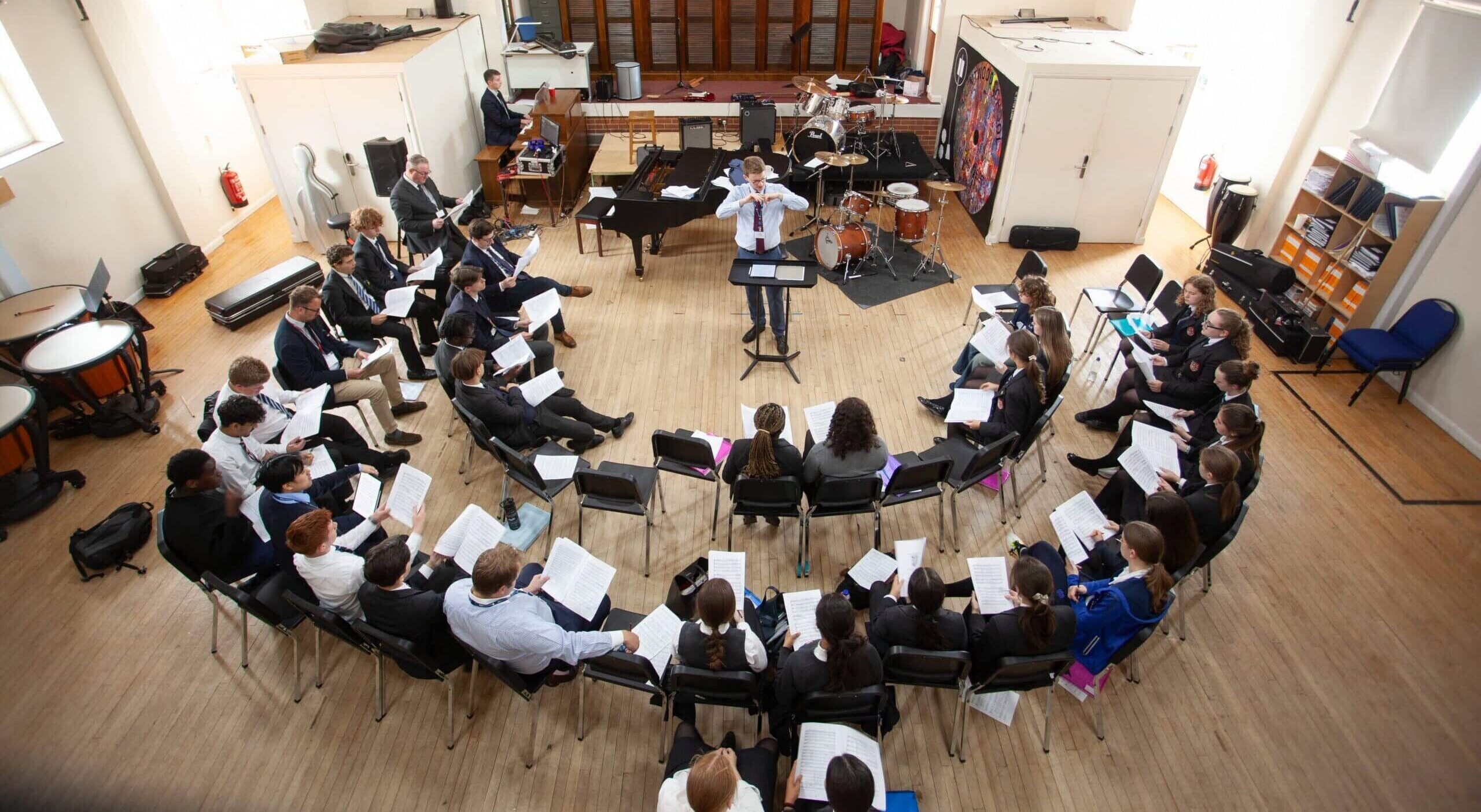
Why is music education important for child development?
Music education plays an important role in child development because it supports far more than musical ability. Learning music helps children develop confidence, creativity, communication skills, discipline, and resilience, while also supporting cognitive, emotional, and social development.
Whether a child is learning an instrument, singing in a choir, or performing as part of an ensemble, music encourages them to think creatively, work collaboratively, and develop the confidence to express themselves.
Research has also shown that music education can support wider learning by developing memory, concentration, listening skills, and problem-solving abilities.
In practice, music education helps children to:
- develop confidence through performance and self-expression
- strengthen concentration, memory, and listening skills
- build discipline through regular practice and perseverance
- encourage creativity and curiosity
- develop teamwork through ensembles, orchestras, and choirs
- support emotional wellbeing and resilience
These are skills that benefit children throughout their education and beyond.

Music and children’s learning
Music encourages children to think in different ways.
Learning an instrument or performing as part of a group requires pupils to listen carefully, solve problems, recognise patterns, and respond thoughtfully to others.
Many of these skills transfer naturally into the classroom, helping children develop concentration, perseverance, and independent learning habits.
Rather than sitting separately from academic learning, music often complements it by encouraging discipline, curiosity, and creative thinking.
Building confidence through music
For many children, music provides opportunities to grow in confidence.
Performing in front of others, whether individually or as part of an ensemble, helps pupils develop self-belief while learning how to manage challenges and celebrate achievement.
Children also learn that progress comes through regular practice and persistence, helping them develop resilience alongside confidence.
These experiences often support wider personal development both inside and outside the classroom.
Communication, teamwork, and collaboration
Music is rarely a solitary activity within school life.
Choirs, orchestras, chamber groups, bands, and ensembles encourage pupils to listen carefully, collaborate with others, and contribute towards a shared goal.
Through these experiences, children develop communication skills, empathy, leadership, and an understanding of collective responsibility.
These qualities continue to benefit pupils throughout their education and later in life.

Creativity and emotional wellbeing
Music also provides an important creative outlet.
For many children, making music offers opportunities to express emotions, explore ideas, and experience enjoyment alongside academic learning.
Creative activities can support emotional wellbeing by providing balance within a busy school environment and encouraging pupils to explore their individual talents and interests.
A broad education recognises that creativity plays an important role in developing confident, well-rounded young people.
Choosing a school’s music programme
When comparing schools, families may wish to consider:
- opportunities for pupils of all abilities to participate in music
- access to high-quality instrumental and vocal tuition
- regular concerts, ensembles, and performance opportunities
- specialist programmes for particularly talented musicians
- opportunities to learn from professional musicians and visiting experts
- whether music is valued as an integral part of school life rather than an optional extra
These factors often provide a good indication of the strength and breadth of a school’s music provision.
Music at Brentwood School
Music has long been an important part of life at Brentwood School and is recognised as an integral part of developing the whole child.
Alongside opportunities for pupils of all abilities to participate in music, Brentwood offers a Specialist Music Programme designed to support talented young musicians as they develop their skills and prepare for future opportunities.
The School’s music provision is further enhanced through its partnership with the Guildhall School of Music & Drama, giving pupils opportunities to learn from leading professional musicians through specialist coaching and masterclasses.
As one of a select number of All-Steinway Schools worldwide, Brentwood provides outstanding facilities for aspiring pianists, while regular concerts, ensembles, choirs, orchestras, and performances allow pupils to build confidence through live performance.
The Brentwood International Music Competition attracts young musicians from around the world, reflecting the School’s commitment to musical excellence while inspiring pupils through exposure to exceptional talent.
Whether a pupil is performing for the first time or pursuing music at the highest level, Brentwood encourages every child to develop confidence, creativity, and a lifelong appreciation of music.
Underpinned by the School’s ethos of Virtue, Learning, Manners, Brentwood views music as an important part of helping young people develop academically, creatively, and personally.

Questions to ask about music education
When visiting a school, parents may find it helpful to ask:
- How many pupils participate in music beyond classroom lessons?
- What opportunities are available for performances and ensembles?
- Does the school offer specialist support for talented musicians?
- How is music integrated into wider school life?
- What opportunities do pupils have to perform, collaborate, and develop their confidence?
These conversations often provide valuable insight into how a school nurtures musical talent and creativity.
Frequently asked questions
Does learning music help children academically?
Is music education only important for children who want a career in music?
At what age should children start learning music?
What makes a strong school music programme?
Why are live performances important for young musicians?
Visiting Brentwood School
Understanding the role music plays in school life is often clearest when experienced in person. Visiting Brentwood School allows families to explore the Music Department, meet staff and pupils, and discover how music contributes to the wider educational experience.
If you are considering Brentwood for your child, we warmly encourage you to arrange a visit and experience the School’s approach first-hand.
Please make an appointment to book a tour of Brentwood School or attend one of our regular Open Mornings.


