

A Lively Mind: Celebrating 250 Years of Jane Austen
Dear all
Yesterday was World Book Day, and we’ve enjoyed English Enrichment Week in school over the past few days. In Monday’s assembly, we celebrated one of the most influential authors in the history of English literature, for whom 2025 marked the 250th anniversary of her birth.
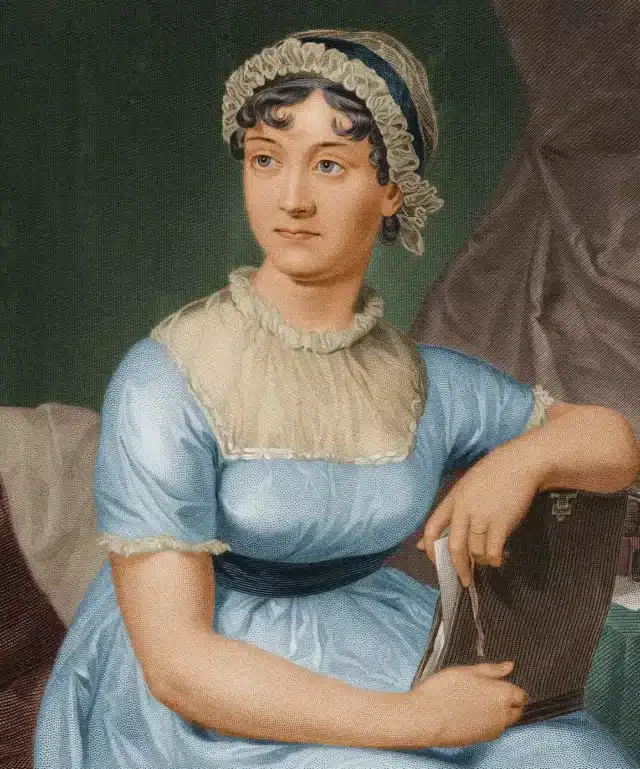
Jane Austen was born on 16th December 1775, and she was to become one of the greatest figures in the history of English literature. She was born in Steventon, Hampshire, where her father served as the rector, and during her teenage years she wrote a series of witty and satirical pieces known as the Juvenilia, encouraged in her creative pursuits by her family, especially her father and her sister, Cassandra. Following her father’s death in 1805, Jane, Cassandra, and their mother faced financial uncertainty and lived temporarily in Bath and Southampton. Four years later, her brother Edward offered them a cottage in Chawton, Hampshire, and it was here, during the last eight years of her life, that she wrote, revised, and published her novels.
The four novels published during her lifetime were: Sense and Sensibility (1811), Pride and Prejudice (1813), Mansfield Park (1814), and Emma (1816), and they were written in just five years. They were all released anonymously. By early 1816, Jane was struggling with illness, and the following Spring, she and Cassandra moved to Winchester for medical treatment. Alas, she died there on 18 July 1817, at the age of only 41, and was buried in Winchester Cathedral. Her final two complete novels, Northanger Abbey and Persuasion, were published posthumously in 1818.
Jane Austen’s influence on English literature is profound. She is widely considered a literary genius who pioneered new writing techniques. Her novels implicitly interpret, critique, and comment on the English landed gentry and are renowned for their wit, irony, and sharp social commentary. Austen’s work marked a critical moment in literary history as she participated in the transition to 19th-century literary realism. Rather than relying on the sensational plots of popular Gothic or sentimental fiction, she offered a ‘realistic study of manners’. In particular, her novels explored the dependence of women on marriage for financial security and social standing.
She was also the first English novelist to make extensive use of free indirect speech. This innovative technique allowed her to blend the narrator’s voice with the character’s thoughts, providing deep insight into their minds and feelings.
Following her death, her work gradually gained wide acclaim and popular readership. Her novels have rarely been out of print since 1833. The global appeal of her stories is evident in the dozens of film and TV adaptations, including the incredibly popular 1995 BBC miniseries starring Colin Firth. Such is the reach and legacy of her stories, they have been the subject of literary “mash-ups”, such as Pride and Prejudice and Zombies, and numerous sequels. Her status as a cultural icon is also commemorated by her appearance on the English £10 note.
I remember being introduced to Jane Austen in my GCSE English class, via Pride and Prejudice (without the Zombies). The 15-year-old me didn’t appreciate at the time what a poignant and incredibly funny novel it was. I hope you won’t make the same mistake as I did, and that you have, or will, read her work. It’s truly remarkable.
Have a great weekend – and perhaps consider picking up one of Jane Austen’s novels!
Best wishes
Michael Bond