

The Protected Views of London
Dear all
To celebrate DT Enrichment Week, Monday’s assembly reading continued our series that has considered some of the sights, sounds and wonders of our capital city, this time with a focus on the protected views of London – legal requirements designed to preserve the sightline to an important historic monument by preventing new buildings from blocking the view.
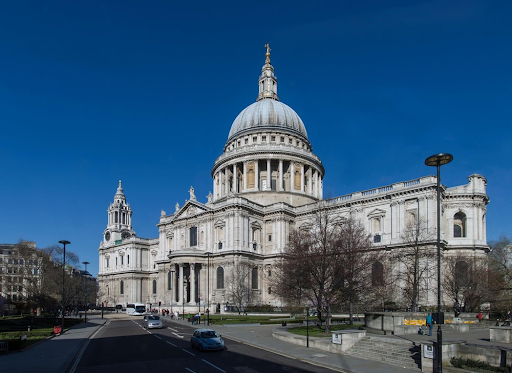
In London, the story of protected views revolves largely around St Paul’s Cathedral, with its iconic dome. For a long time, no building in the city was allowed to be taller: in the late 19th century, for example, there was a law specifying that no structure could be built higher than a fireman’s ladder, to ensure St Paul’s was never overshadowed. However, as pressure mounted to build taller office blocks, an architect named W. Godfrey Allen plotted multiple view corridors across the city, which led, in 1938, to the City of London introducing a ‘protected views’ system for developers. This is now a strict legal framework featuring 13 specific protected sightlines. While a few preserve views of the Palace of Westminster and the White Tower, the vast majority are dedicated to protecting the view of St Paul’s Cathedral.
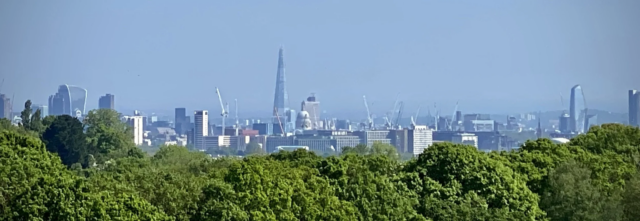
The views originate from vantage points all around the capital, such as the summits of Parliament Hill and Primrose Hill, Alexandra Palace, Blackheath, and Greenwich Park. Perhaps the most remarkable is the view from King Henry VIII’s Mound in Richmond Park. Located over 10 miles away from the cathedral, it frames St Paul’s through a specially maintained gap in a holly hedge. Legend has it that this is the spot where King Henry VIII stood to look out over the landscape while hunting.
Because of these protected corridors, architects have had to use their skills to ensure buildings comply – the ‘Cheesegrater’ on Leadenhall Street has to lean backwards out of the way so it does not block a protected view.
London is not alone in doing this. Cities all over the world place immense value on their defining views and skylines. Edinburgh, for example, has around 170 protected views, while the concept is increasingly commonplace elsewhere.
Some cities protect nature rather than architecture, one of the best examples being Vancouver, Canada, which ensures that new skyscrapers don’t block glimpses of the surrounding mountains. As our cities grow and populations rise, urban planners face a major dilemma. London needs hundreds of thousands of new homes, and developers are desperate to build. We are left with a difficult question: do we prioritise protecting our visual history, or do we compromise the past to make room for the future? The next time you find yourself in London, look out for the historic dome of St Paul’s between the modern glass towers, and remember the invisible corridors in the sky that keep that view alive.
If you’d like to know more about the protected views of London, you can do so via this link.
Have a great weekend
Best wishes
Michael Bond