
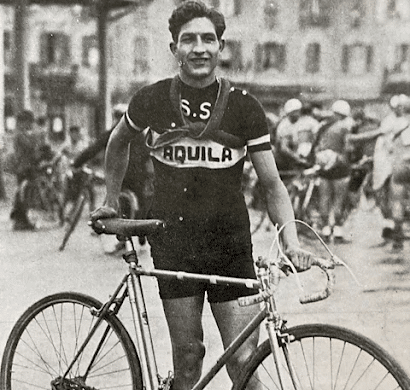


‘Some medals are made to hang on the soul, not the jacket’ (Gino Bartali)
Dear all
In a few weeks, the eyes of the world will turn to one of the most famous and popular sporting events on the planet: the Tour de France. The excitement is already building among cycling enthusiasts who are looking forward to seeing the 184 riders who will line up in Barcelona for the 113th Tour. Over 21 gruelling stages, these athletes will climb over 54,000 metres in elevation, crossing the Pyrenees and the Alps in a test of human endurance that has fascinated audiences for over a century.
When we think of the Tour de France today, we think of modern technology and global superstars, but the history of the race is built on the legends of the past. One of the greatest of these was an Italian rider named Gino Bartali. Known as ‘The Iron Man,’ Bartali was a champion road cyclist who dominated the sport either side of the Second World War. His particular specialism was in the climbing sections of the Tour, which he won twice, once in 1938 and again in 1948. His 1948 victory is still famous today because it came a full ten years after his first win – the largest gap between victories in the race’s history. During that 1948 Tour, he achieved something that has never been equalled: winning three consecutive mountain stages in the Alps.
As impressive as his sporting achievements were, however, he carried with him a secret that only became known after his death many years later. During the Second World War, the Tour was cancelled. Bartali spent his time apparently training on the roads of his home nation, Italy. However, in reality, he was using his fame as a cover for dangerous Resistance work.
As a national hero, the Fascist police and German troops often let him pass through checkpoints without suspicion as he cycled hundreds of kilometres between cities. What they didn’t know was that Bartali had counterfeit identity documents and photographs hidden inside the hollow frame and handlebars of his bicycle. He delivered these forged papers to help Jewish people escape persecution, and it’s estimated that he helped save over 800 lives. He even hid a Jewish family in his own cellar to protect them from the authorities.
The most remarkable part of this story is that Bartali never spoke about it. He didn’t even tell his own family the full extent of his bravery. It was only after he died at the age of 85 in 2000 that his heroic actions finally came to light through the diaries and testimonies of those he helped. In 2013, he was posthumously recognised as ‘Righteous Among the Nations,’ a title given to non-Jews who risked their lives to save Jews during the Holocaust.
Gino Bartali once said, ‘Some medals are made to hang on the soul, not the jacket,’ which speaks to the importance of moral courage. Bartali lived through a time of repression and fear, where doing the right thing could have cost him his life. Yet, he chose to use his unique talents and his public status not for his own glory, but to protect others. A powerful lesson that doing the right thing isn’t always about getting a reward or public recognition, and that true character is often found in the quiet, difficult choices we make when no one is watching.
Have a great weekend
Best wishes
Michael Bond


